Did you know?
Hello everybody! In this blog, I want to share five items on food that are not generally know to the public. This is what I found on other websites about food.
- Forgotten vegetables
Forgotten vegetables are heirloom plants that have recently become neglected or have fallen out of favor. People often forget they are edible, perhaps because of their improbable forms, and colorful appearance.
Today, some of these vegetables have regained popularity. You can find their seeds online or buy them fresh at the farmer’s market.
Here are eleven of the best forgotten vegetables.
Learn them, cultivate them, enjoy them!
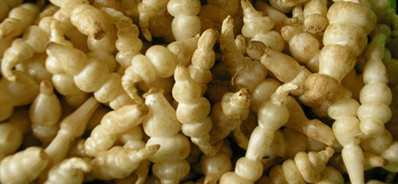
CHOROGI
Chorogi, also known as the Chinese artichoke, is a small root vegetable originally from China. It came to Europe and the Americas around the 1800s.
Its atypical shape can be compared to that of a big white caterpillar.
Widely consumed during the wars of the last century, it was subsequently abandoned from Westerners due to this connotation.
Yet, chorogi has a fine flavor. Its slightly sweet taste reminds us of salsify.
It can be found in high-end grocery stores, as well as Asian markets.
SORREL
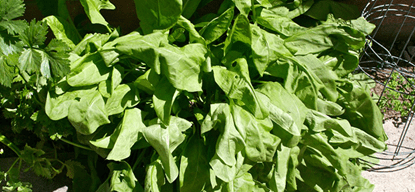
The common sorrel is often used like parsley, and had its heydays during the time of Louis XIV in France.
Her long green rounded leaves are reminiscent of spinach.
The garden sorrel grows in the ground. Its leaves are 5 to 6 inches on average.
Lovers of tart flavors can enjoy sorrel in soups or broths.
It has grown in popularity, which leads to grocery stores carrying it more and more. You can find it usually chopped, or whole.
- New cooking techniques
SAUTEING
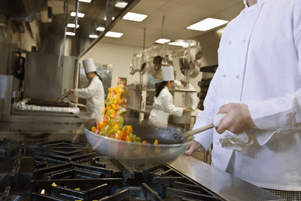
Sautéing is a form of dry-heat-cooking that uses a hot pan and a small amount of fat to cook foods like vegetables, meats, and seafood very quickly. Like other dry-heat cooking methods, sautéing browns the food’s surface as it cooks and develops complex flavors and aromas.
DEGLAZING A PAN
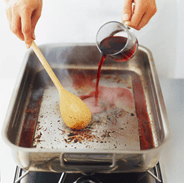
Deglazing a pan is a technique used after sautéing, searing, or browning food in a pan. Liquid is added, such as stock or wine, to loosen and dissolve the food particles that are stuck to the bottom of the pan. The flavorful mixture produced by deglazing can be used to make a simple pan sauce.
Pancakes & crepes
Did you know that the first pancake-type foods were eaten by prehistoric peoples? No, they were not the same pancakes we eat today. These simple, fried concoctions of milk, flour, eggs and spices were called “Alita Dolcia” (Latin for “another sweet’) by the Ancient Romans.

Depending upon the proportion of ingredients and method of cooking, the finished product might have approximated pancakes, fritters, omlettes, or custard. Some of these dishes were sweet (fruit, nuts, honey); others were savory (cheese, fish, meat). These ancient recipes are also thought to be the relatives of waffles, cakes, muffins, fritters, spoonbread and doughnuts. Pancakes, as we Americans know them today, were “invented” in Medieval Europe. Throughout history, pancake ingredients (finest available wheat flour, buckwheat, cornmeal, potatoes), cooking implements (ancient bakestones, medieval hearths, pioneer griddles perched on campfire embers, microwave ovens), social rituals (Shrove Tuesday crepes, Chanukah latkes, mass quantities for community pancake breakfast fundraisers) and final product (thick or thin, savory or sweet, slathered with butter and smothered with syrup, or gently rolled around delicate fruit) have reflected regional cuisine and local customs. Cake-like galettes [France], thick potato pancakes [Germany], Boxty [Ireland], paper thin crepes [France], palascinta [Hungary], drop scones [Scotland], injera [Ethiopia], trid [Morocco], coarse cornmeal Indian cakes [colonial America], flapjacks [19th century America], rich blini [Russia], poori [India], qata’if (Middle East) dadar gutung [Indonesia], bao bing [China] and generic hot cakes are all members of the pancake family.
The connection between pancakes and Shrove Tuesday (the day before the Christian season of Lent begins) is rooted in the need to deplete stores of eggs and fat…both forbidden by the Catholic Church for consumption during Lent. The practice began in Medieval times and continues today (in some places) in the form of “Pancake Day.” Modern American pancake syrups surfaced in the late 1880s.
sources;
Freedman, A. (2013-2018). 11 forgotten vegetables. Consulted on 17/01/2020 via http://www.groomedhome.com/easy-green/11-forgotten-vegetables#ixzz6BGSdTcvf
Alfaro, D. (2020, January 17) 25 cooking techniques everyone should know. Consulted on 17/01/2020 via https://www.thespruceeats.com/cooking-techniques-everyone-should-know-4169657
Olver, L. (2015, January 3). Pancakes &crepes. Consulted on 17/01/2020 via http://foodtimeline.org/foodfaq2.html#pancakes
My favourite dish
Hello everybody!
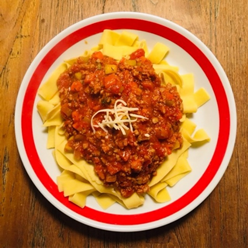
In my new blog post I want you to present my favourite dish; spaghetti bolognese. I am fond of Italian food, so it’s not weird that this is my favourite dish. I think the reason why I really like this dish is more emotional; we often eat this on Friday, on my birthday, or when we are on a visit with my grandmother. The taste and smell of spaghetti remind me on all those nice moments. That and the scrumptious taste of the Bolognese sauce is what makes it my favourite dish! But what is the recipe? This is what I found on the internet! I would say; try this at home and enjoy!
The best spaghetti bolognese recipe
PREP: 25 MINSCOOK: 1 HR, 50 MINSEASYSERVES 6
Our best ever spaghetti bolognese is super easy and a true Italian classic with a meaty, chilli sauce. This recipe comes courtesy of BBC Good Food user Andrew Balme
Ingredients
- 1 tbsp olive oil
- 4 rashers smoked streaky bacon, finely chopped
- 2 medium onions, finely chopped
- 2 carrots, trimmed and finely chopped
- 2 celery sticks, finely chopped
- 2 garlic cloves, finely chopped
- 2-3 sprigs rosemary, leaves picked and finely chopped
- 500g beef mince
For the bolognese sauce
- 2 x 400g tins plum tomatoes
- small pack basil, leaves picked, ¾ finely chopped and the rest left whole for garnish
- 1 tsp dried oregano
- 2 fresh bay leaves
- 2 tbsp tomato purée
- 1 beef stock cube
- 1 red chilli, deseeded and finely chopped (optional)
- 125ml red wine
- 6 cherry tomatoes, sliced in half
To season and serve
- 75g parmesan, grated, plus extra to serve
- 400g spaghetti
- crusty bread, to serve (optional)

- Put a large saucepan on a medium heat and add 1 tbsp olive oil.
- Add 4 finely chopped bacon rashers and fry for 10 mins until golden and crisp.
- Reduce the heat and add the 2 onions, 2 carrots, 2 celery sticks, 2 garlic cloves and the leaves from 2-3 sprigs rosemary, all finely chopped, then fry for 10 mins. Stir the veg often until it softens.
- Increase the heat to medium-high, add 500g beef mince and cook stirring for 3-4 mins until the meat is browned all over.
- Add 2 tins plum tomatoes, the finely chopped leaves from ¾ small pack basil, 1 tsp dried oregano, 2 bay leaves, 2 tbsp tomato purée, 1 beef stock cube, 1 deseeded and finely chopped red chilli (if using), 125ml red wine and 6 halved cherry tomatoes. Stir with a wooden spoon, breaking up the plum tomatoes.
- Bring to the boil, reduce to a gentle simmer and cover with a lid. Cook for 1 hr 15 mins stirring occasionally, until you have a rich, thick sauce.
- Add the 75g grated parmesan, check the seasoning and stir.
- When the bolognese is nearly finished, cook 400g spaghetti following the pack instructions.
- Drain the spaghetti and stir into the bolognese sauce. Serve with more grated parmesan, the remaining basil leaves and crusty bread, if you like.
source: Balmer, A. (2015, July). The best spaghetti Bolognese recipe. Consulted on 03/02/2020 via https://www.bbcgoodfood.com/recipes/best-spaghetti-bolognese-recipe
My favourite restaurant
Yesterday I went to the ‘Spork’, it was a very delightful evening! Let’s write a review!
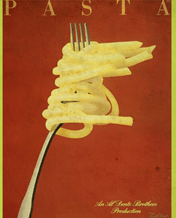

My favourite restaurant is the ‘Spork’. I will tell you about my experiences. The restaurant is very cozy because of his wooden tables, fireplace and unique decor that refers to many famous athletes. Besides that, you also have the scrumptious food! The restaurant is famous for its lip-smacking steaks, but the pastas are also delicious. You can also choose for a salad with meat or fish. In general, the restaurant is known for a mouth-watering Belgian cuisine. I always choose the salad with goat cheese, scampi and bacon or the spaghetti with scampi and pesto. The combination of the different ingredients by the salad is really delicious. They can also make very good scampi that’s why the pasta with pesto and scampi is a real must!
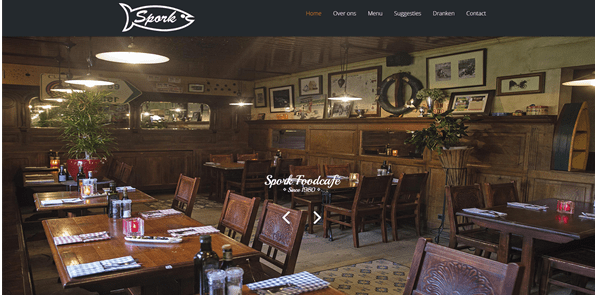
Next time you will go to a restaurant, you know which one to choose!
Some more information;
Address of the restaurant: Spork Foodcafé, Gildenstraat 1, 3550 Heusden-Zolder
Link to their website: http://www.spork.be
Link to their menu: http://www.spork.be/menu
Spork Foodcafé, Gildenstraat 1, 3550 Heusden-Zolder
 EmmAmmT